
Table of Contents
Imagine waking up tomorrow in a world without smartphones, computers, or even the wheel. No electricity, no internet, no cars. 🌍 It sounds like stepping back thousands of years, doesn’t it? This thought experiment reveals just how deeply technology has woven itself into the fabric of human existence. From the moment our ancestors first shaped stone tools to today’s artificial intelligence revolutionizing industries, technology has been humanity’s greatest enabler and transformer.
As someone who has witnessed the evolution from dial-up internet to 5G networks, I’ve seen firsthand how technology doesn’t just change what we do—it fundamentally reshapes who we are as a society. But what exactly is technology? Is it just the latest gadget in your pocket, or something far more profound?
Key Takeaways
- Technology encompasses all tools, systems, and methods that humans create to solve problems and improve life, from simple stone tools to complex AI systems
- Technology evolution follows patterns of continuous improvement, disruption, and adaptation that have accelerated exponentially in recent decades
- Modern technology spans multiple domains including information technology, biotechnology, nanotechnology, and emerging fields like quantum computing
- Technology’s impact is double-edged, offering tremendous benefits while creating new challenges for society, privacy, and human connection
- Understanding technology fundamentals is essential for navigating our increasingly digital world and making informed decisions about its role in our lives
Understanding Technology: The Foundation
Defining Technology in the Modern Era
At its core, technology refers to the application of scientific knowledge for practical purposes. It encompasses the tools, systems, techniques, and processes that humans develop to solve problems, fulfill needs, and enhance our capabilities. But this definition barely scratches the surface of what technology truly represents in our modern world.
Technology isn’t just about gadgets and gizmos—it’s about human ingenuity manifested in tangible form. When I think about technology, I consider it humanity’s way of extending our natural abilities. Our ancestors couldn’t fly, so we invented airplanes. We couldn’t communicate across vast distances instantly, so we developed telecommunications. We couldn’t store and process vast amounts of information quickly, so we created computers.
The Broader Scope of Technology
Technology exists in multiple forms and serves various functions:
🔧 Physical Technology: Tangible tools and machines like smartphones, cars, medical devices, and manufacturing equipment.
💡 Conceptual Technology: Methods, processes, and systems like programming languages, business methodologies, and educational frameworks.
🏛️ Social Technology: Organizational structures and social systems that help coordinate human activities, such as governments, markets, and institutions.
This multi-faceted nature of technology means it touches virtually every aspect of human life, often in ways we don’t immediately recognize.
The Evolution of Technology Through History
From Stone Tools to Silicon Chips
The story of technology is fundamentally the story of human progress. Let me take you on a journey through time to understand how we arrived at our current technological landscape.
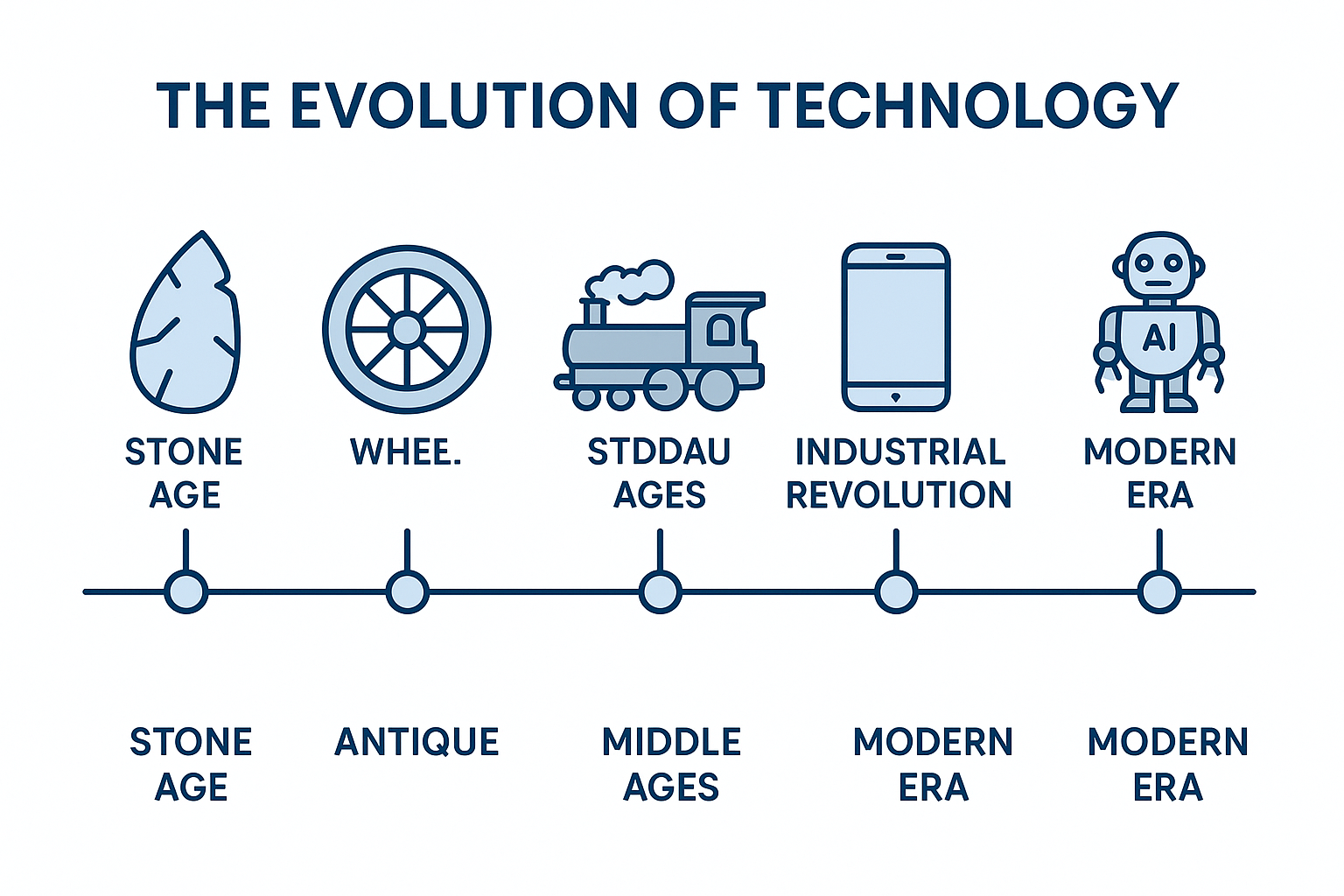
The Stone Age (2.5 million years ago): Our earliest ancestors discovered they could shape stones into cutting tools. This seemingly simple innovation marked the beginning of technology as we know it. These tools didn’t just help with hunting and food preparation—they fundamentally changed how humans interacted with their environment.
The Agricultural Revolution (10,000 BCE): The development of farming technology, including plows, irrigation systems, and crop storage methods, allowed humans to settle in permanent communities. This technological shift created the foundation for civilization itself.
The Industrial Revolution (1760-1840): Steam engines, mechanized manufacturing, and mass production transformed society from agricultural to industrial. I often think about how this period mirrors our current digital transformation—both represent fundamental shifts in how humans work and live.
The Information Age (1950s-present): The invention of computers, the internet, and digital technologies has created our current era of rapid technological advancement.
Acceleration of Technological Progress
What fascinates me most about technology’s evolution is its exponential acceleration. Consider this: it took humans thousands of years to progress from stone tools to the printing press, but only decades to go from the first computers to smartphones that are more powerful than the computers that sent humans to the moon.
This acceleration follows what technologists call Moore’s Law—the observation that computing power doubles approximately every two years. While Moore’s Law specifically relates to computer processors, similar patterns of exponential improvement appear across many technological domains.
Types and Categories of Technology
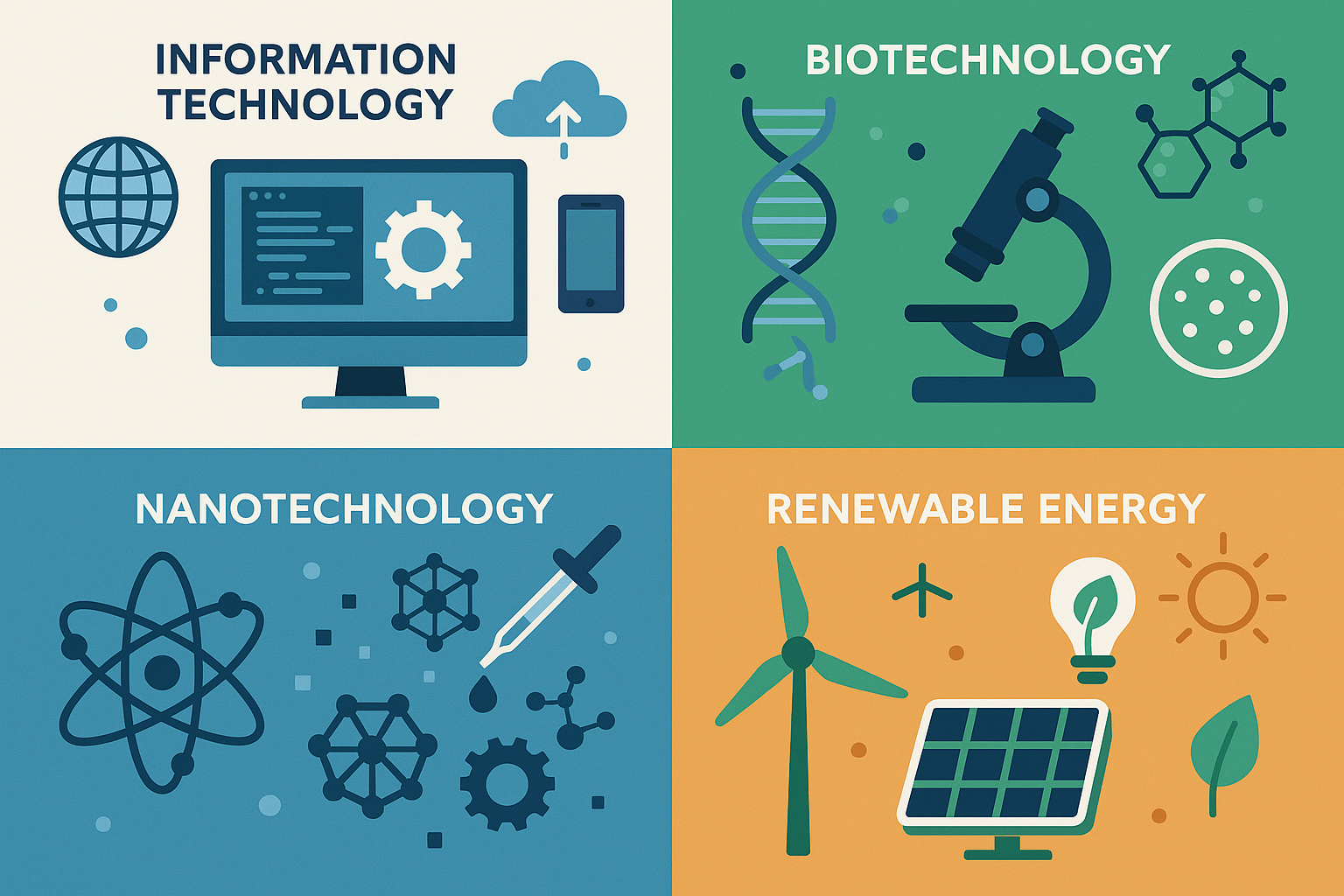
Information Technology: The Digital Backbone
Information Technology (IT) forms the backbone of our modern digital society. It encompasses:
- Hardware: Physical components like computers, servers, smartphones, and networking equipment
- Software: Programs, applications, and operating systems that make hardware useful
- Networks: Systems that connect devices and enable communication
- Data Management: Technologies for storing, processing, and analyzing information
I remember when email was revolutionary—now we carry more computing power in our pockets than entire companies had access to in the 1990s. This rapid evolution of IT has transformed how we work, communicate, learn, and entertain ourselves.
Biotechnology: Merging Life and Science
Biotechnology represents one of the most promising and controversial technological frontiers. It involves using living organisms or biological systems to develop products and solutions. Key areas include:
- Medical Biotechnology: Gene therapy, personalized medicine, and bioengineered treatments
- Agricultural Biotechnology: Genetically modified crops and sustainable farming techniques
- Industrial Biotechnology: Using biological processes for manufacturing and environmental cleanup
Emerging Technology Frontiers
🤖 Artificial Intelligence and Machine Learning: Systems that can learn, reason, and make decisions, increasingly matching or exceeding human capabilities in specific domains.
⚛️ Nanotechnology: Manipulation of matter at the molecular and atomic scale to create materials and devices with novel properties.
🔬 Quantum Computing: Computers that use quantum mechanical phenomena to process information in fundamentally new ways.
🌐 Internet of Things (IoT): Networks of interconnected devices that can communicate and share data autonomously.
How Technology Works: Core Principles
The Problem-Solution Cycle
All technology follows a fundamental pattern: identifying problems and creating solutions. This cycle drives continuous innovation and improvement. Here’s how it typically works:
- Problem Identification: Recognizing a need or challenge
- Research and Development: Investigating possible solutions
- Design and Prototyping: Creating and testing initial versions
- Implementation: Bringing the solution to market or practical use
- Iteration and Improvement: Refining based on feedback and new needs
Systems Thinking in Technology
Modern technology rarely exists in isolation. Instead, technologies form complex, interconnected systems. Your smartphone, for example, relies on:
- Semiconductor technology for processors
- Battery technology for power
- Wireless communication technology for connectivity
- Software technology for functionality
- Manufacturing technology for production
- Supply chain technology for distribution
Understanding these interconnections helps us appreciate both the complexity and fragility of our technological infrastructure.
Technology’s Impact on Society and Daily Life
Transforming Communication and Relationships
Technology has fundamentally altered how humans connect with each other. I’ve witnessed this transformation personally—from writing letters to instant messaging, from long-distance phone calls to video conferencing with people across the globe.
Positive Impacts:
- Instant global communication
- Access to diverse perspectives and cultures
- Ability to maintain relationships across distances
- New forms of creative expression and collaboration
Challenges:
- Digital communication sometimes lacks emotional nuance
- Social media can create echo chambers
- Constant connectivity can lead to information overload
- Screen time may impact face-to-face social skills
Revolutionizing Work and Education
The workplace has been completely transformed by technology. Remote work, which became widespread during the 2020 pandemic, demonstrated how technology can reshape not just how we work, but where and when we work.
Educational Technology has similarly revolutionized learning:
- Online courses make education accessible globally
- Interactive simulations enhance understanding
- Personalized learning adapts to individual needs
- Digital tools enable new forms of creativity and expression
Healthcare and Medical Breakthroughs
Medical technology continues to extend and improve human life in remarkable ways:
- Diagnostic Technology: MRI, CT scans, and genetic testing enable early disease detection
- Treatment Technology: Robotic surgery, targeted therapies, and implantable devices
- Preventive Technology: Wearable devices that monitor health metrics
- Telemedicine: Remote healthcare delivery, especially valuable in underserved areas
Benefits and Challenges of Technology
The Double-Edged Nature of Progress
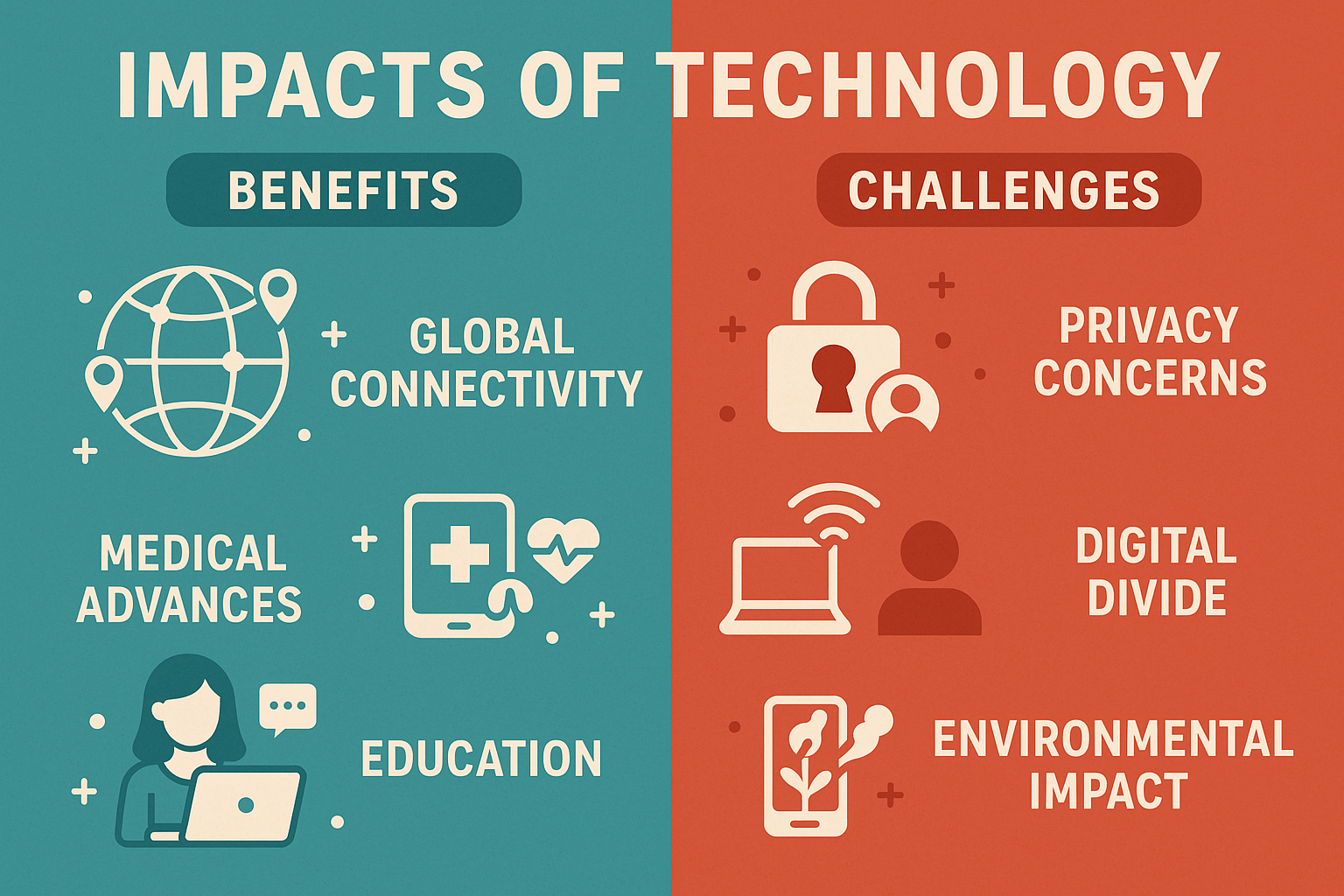
Technology presents us with a fascinating paradox: the same innovations that solve problems often create new challenges. This double-edged nature requires us to thoughtfully consider both benefits and risks.
Major Benefits of Technology
🚀 Enhanced Human Capabilities: Technology amplifies what humans can accomplish, from physical tasks to mental processing.
🌍 Global Connectivity: We can now collaborate, learn from, and support people anywhere in the world.
📈 Improved Efficiency: Automation and digital tools dramatically increase productivity across industries.
🏥 Better Healthcare: Medical technology has extended lifespans and improved quality of life for millions.
🎓 Democratized Education: Online learning platforms make high-quality education accessible to anyone with internet access.
Significant Challenges
🔒 Privacy and Security Concerns: Our digital lives generate vast amounts of personal data that can be misused or stolen.
📱 Digital Addiction: Constant connectivity can negatively impact mental health and real-world relationships.
⚖️ Digital Divide: Not everyone has equal access to technology, creating new forms of inequality.
🤖 Job Displacement: Automation may eliminate certain types of employment faster than new jobs are created.
🌱 Environmental Impact: Manufacturing and powering technology consumes significant natural resources and energy.
Technology in Different Industries
Healthcare Technology Revolution
The healthcare industry exemplifies how technology can transform an entire sector. Electronic health records have replaced paper files, telemedicine enables remote consultations, and AI assists in diagnosis and treatment planning.
I recently spoke with a surgeon who described how robotic surgical systems allow for incredibly precise operations with smaller incisions and faster recovery times. This represents technology at its best—enhancing human expertise rather than replacing it.
Financial Technology (FinTech)
The financial industry has been revolutionized by technology:
- Digital Banking: Online and mobile banking services
- Cryptocurrency: Blockchain-based digital currencies
- Payment Systems: Contactless payments and digital wallets
- Investment Technology: Robo-advisors and algorithmic trading
Transportation Technology
Transportation technology is rapidly evolving:
- Electric Vehicles: Reducing environmental impact
- Autonomous Vehicles: Self-driving cars and trucks
- Ride Sharing: App-based transportation services
- Smart Traffic Systems: Optimizing traffic flow and safety
The Future of Technology
Emerging Trends and Predictions
Looking ahead to the next decade, several technological trends will likely reshape our world:
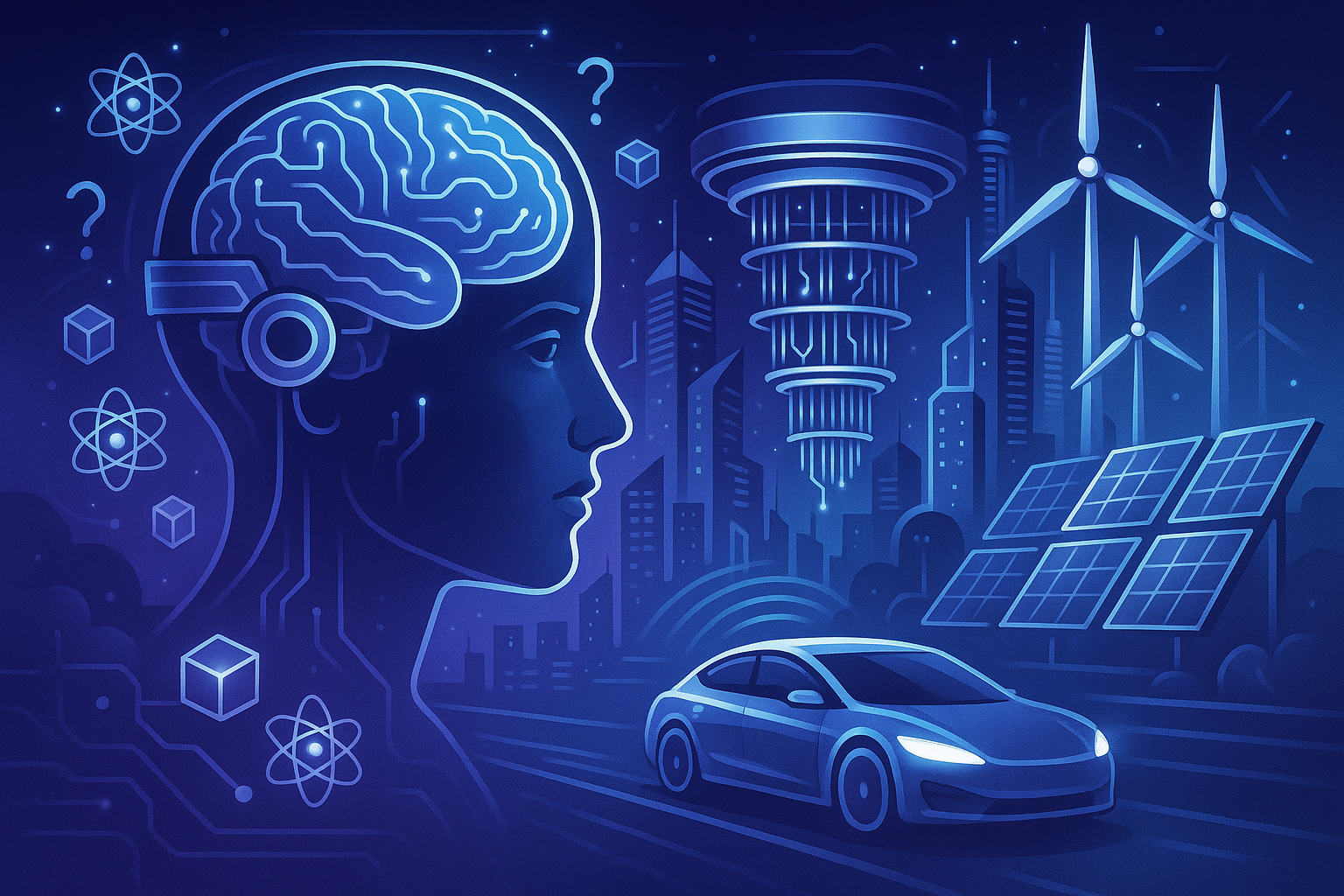
🧠 Brain-Computer Interfaces: Direct connections between human brains and computers could revolutionize how we interact with technology.
🌐 Extended Reality (XR): Combining virtual reality, augmented reality, and mixed reality to create immersive digital experiences.
🔋 Advanced Energy Storage: Better batteries and alternative energy storage solutions will enable wider adoption of renewable energy.
🧬 Synthetic Biology: Engineering biological systems to produce materials, medicines, and even food.
Preparing for Technological Change
As technology continues to evolve rapidly, staying adaptable becomes crucial. Here are strategies I recommend:
- Develop Digital Literacy: Understand basic technological concepts and tools
- Embrace Lifelong Learning: Continuously update skills and knowledge
- Think Critically: Evaluate technology’s benefits and risks thoughtfully
- Stay Human-Centered: Remember that technology should serve human needs, not the reverse
🚀 Technology Evolution Timeline
Explore how technology has transformed human civilization across different eras
🗿 Stone Age Technology
The foundation of all human technology began with our ancestors learning to shape and use tools. These early innovations set the stage for everything that followed.
🌾 Agricultural Revolution
The shift from hunting and gathering to agriculture created the foundation for permanent settlements and complex civilizations.
⚙️ Industrial Revolution
Steam power and mechanization transformed manufacturing, transportation, and society, moving from agricultural to industrial economies.
💻 Information Age
Computers and the internet created a new economy based on information processing and global digital communication.
🤖 Modern Era (2020s)
Artificial intelligence, biotechnology, and quantum computing are creating new possibilities while raising important ethical questions.
Ethical Considerations and Responsible Technology Use
The Importance of Technological Ethics
As technology becomes more powerful and pervasive, ethical considerations become increasingly important. We must ask not just “can we build this?” but “should we build this?” and “how do we ensure it benefits humanity?”
Key ethical considerations include:
🔐 Privacy Rights: How much personal data should companies collect, and how should it be used?
⚖️ Algorithmic Bias: Ensuring AI systems treat all people fairly regardless of race, gender, or socioeconomic status.
🌍 Environmental Responsibility: Developing sustainable technologies that don’t harm our planet.
🤝 Digital Equity: Ensuring everyone has access to essential technologies and digital literacy.
Building a Responsible Relationship with Technology
I believe we need to develop a more intentional relationship with technology. This means:
- Being Mindful Consumers: Choosing technologies that align with our values
- Supporting Ethical Companies: Favoring businesses that prioritize user privacy and social responsibility
- Staying Informed: Understanding how the technologies we use actually work
- Advocating for Good Policy: Supporting regulations that protect consumers and society
Practical Tips for Navigating Our Technological World
Developing Digital Literacy
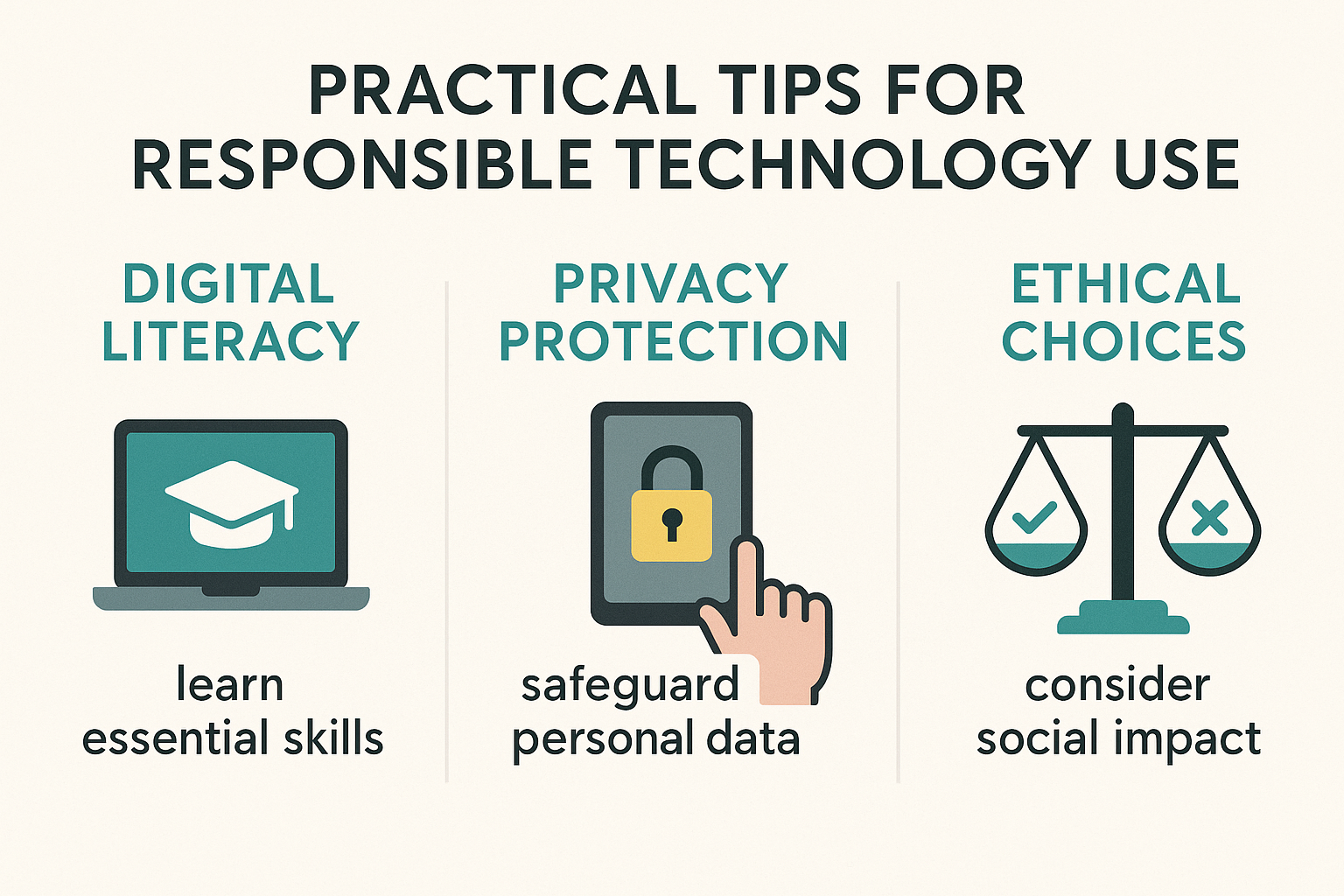
In 2025, digital literacy is as important as traditional literacy. Here are essential skills everyone should develop:
🔍 Information Evaluation: Learning to distinguish reliable sources from misinformation
🛡️ Cybersecurity Awareness: Understanding basic online safety practices
⚙️ Technology Troubleshooting: Basic problem-solving skills for common tech issues
📊 Data Privacy Management: Knowing how to control your digital footprint
Making Smart Technology Choices
When evaluating new technologies, I recommend considering:
- Necessity: Do you actually need this technology, or is it just appealing?
- Privacy Impact: What personal information does it collect and how is it used?
- Long-term Value: Will this technology continue to be useful and supported?
- Environmental Impact: What are the environmental costs of manufacturing and using this technology?
Balancing Technology Use
Finding the right balance between leveraging technology’s benefits while avoiding its pitfalls requires intentional choices:
📱 Mindful Usage: Set boundaries around screen time and notification frequency
🧘 Digital Detox: Regularly disconnect to maintain perspective and mental health
👥 Prioritize Human Connection: Use technology to enhance, not replace, face-to-face relationships
🎯 Purpose-Driven Adoption: Choose technologies that support your goals rather than distract from them
Conclusion
Technology represents humanity’s greatest tool for solving problems and expanding our capabilities. From the first stone tools to today’s artificial intelligence systems, technology has consistently transformed how we live, work, and relate to each other. As we’ve explored throughout this guide, technology is far more than just gadgets and software—it’s the manifestation of human creativity and our drive to improve life.
Understanding technology in 2025 means recognizing both its tremendous potential and its significant challenges. The same innovations that connect us globally can also isolate us locally. The systems that make us more productive can also make us more distracted. The tools that solve old problems often create new ones.
The key to thriving in our technological world lies in developing digital literacy, maintaining ethical awareness, and making intentional choices about how we integrate technology into our lives. We must be neither technophobic nor uncritically technophilic, but rather thoughtful users who harness technology’s power while remaining grounded in human values.
As we look toward the future, emerging technologies like artificial intelligence, quantum computing, and biotechnology will continue to reshape our world in ways we can barely imagine. By understanding the fundamental principles of how technology works and evolves, we can better prepare ourselves to adapt, contribute, and ensure that technological progress serves humanity’s best interests.
Your Next Steps:
- Assess your current digital literacy and identify areas for improvement
- Evaluate your relationship with technology—are you using it intentionally or being used by it?
- Stay informed about emerging technologies that might impact your field or interests
- Engage in conversations about technology ethics in your community
- Support responsible technology development through your choices as a consumer and citizen
Remember, technology is ultimately a human creation designed to serve human needs. By staying informed, engaged, and intentional, we can ensure that technology continues to be a force for positive change in our world.